Categories
Baseball Jack Bauer Squared Sim Baseball

Games 10-12: Oh No, a Losing Streak!

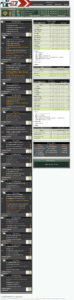
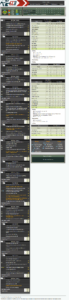
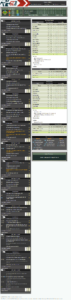
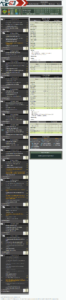
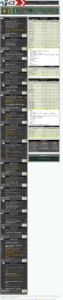
Our three-game series against Royal Gamers didn’t go well at all. The hosts swept us, sending us to a four-game losing streak overall and dropping our record to 5-7. We are fortunately only 1 game behind in our division still, and 12 games is still very early, but 6 losses in 7 games definitely starts to mess with your confidence.

In the series opener we were facing Sid Fernandez, a longtime Met who was famously hard to hit. In fact, he started off our 24×24 season by throwing a no-hitter! We put an end to his hopes of doing it again in the 2nd inning and held a 4-3 lead until Royal Gamers rallied for 4 runs in the 6th and went on to win, 7-4.

Game 10

In the second game, once again we held a one-run lead in the 6th inning and gave up 4 runs in the bottom of the inning. Bob Bailey hit a solo homer in the 9th inning to get us within a run but we fell short, 6-5.

Game 11

The final game of the series was another close loss, this time 3-2. We scratched out a couple of runs off Catfish Hunter, and he was just a little bit better than my Bert Blyleven. That made us 0-4 in one-run games, which is a very frustrating stat. If those break 2-2, we’d be 7-5 instead. And based on our 66 runs scored vs. 57 allowed, we should be 7-5. That’s a sign we should even things out soon.

Game 12

We start an eight-game stretch of division games at home next, with Steroids Make You Fast; Just ask Jose coming in first. They are off to a 3-9 start so maybe it’s a chance to get this team back to winning ways. 

Categories
Baseball MLB Sim Baseball

Bad Neighbor League

As I described in my previous post, I won my 23rd title in Sim League Baseball today. The theme for this league was one of my favorites and worthy of some extra footnotes.

The Bad Neighbor League included only MLB teams from 1922, 1932, 1942, 1952, 1962, 1972, and 1982. Owners have to build their 25-man rosters using players from four teams, using at least six players from each team. The catch is you only get to choose two of your teams, and two of your division mates (bad neighbors) get to stick you with bad ones.

As if that weren’t enough, your third division opponent gets to “dagger” any player on your four teams that you cannot use as well as one of the four ballparks you have available to you. Oh, and the roster restrictions and salary cap are very challenging, too. 

So when you’re building the team, you have to work around using a lot of players you don’t want to and fit them in with the ones you do want. It’s a real puzzle, and everyone ends up only partially happy with their team. 

After one of my division mates “gifted” me the 1972 Texas Rangers, who were managed to a 54-100 season by Hall of Famer Ted Williams, I commented that based on the woeful hitting of that team Williams probably spent the season in the dugout daydreaming about his famous hobby, fishing. So of course I had to name the team, Ted Williams Would Rather Be Fishing.

One of my team’s heroes turned out to be a somewhat unlikely contender, considering he cost only about $1 million out of the $80 million allotted. One of the joys of games like this is expanding my knowledge of baseball history and its players, because no matter how long I keep at this I’ll be encountering players I didn’t know.

Frank Biscan pitched for the St. Louis Browns in 1942, 1946, and 1948, totalling only 148 career innings. He was a relief pitcher in an era when that role went to failed starters, a far cry from the specialized role it plays in today’s MLB. In 1942, the season I used, Biscan appeared 11 times for 27 innings and posted a 2.33 ERA. Since the cutoff for having your season used in the sim is 25 innings, the left-hander barely made it.

I installed Biscan as my closer, and he delivered a near-perfect season. He made 36 appearances for me and earned 35 saves in his first 35 tries. Only in his final game did he blow a save, but the team rallied so he earned the victory. Then in the playoffs, Biscan went 7 for 7 in saves, including 3 games in the World Series. He might well have been my MVP.

Another interesting note about Ted Williams Would Rather Be Fishing while I’m at it. The League Championship Series went a full 7 games, and in the deciding game my leadoff batter Wally Judnich of the 1942 Browns hit a home run to start the bottom of the 1st inning. Our ace pitcher, Johnny Vander Meer (most famous for throwing back-to-back no-hitters in 1938, a feat never duplicated), pitched 8 shutout innings, and Biscan finished it off for a 1-0 series-clinching victory.

Cut to the first game of the World Series. Once again, Judnich led off the bottom of the 1st inning with a home run. And once again that was the only run of a 1-0 victory. The odds against winning back-to-back games in that nearly identical fashion, let alone critical playoff games, must be astronomical. As I posted in the league forum, Holy deja vu, Batman!

One of the discoveries you make after thousands of simulated seasons is that you are actually observing many more games than have ever actually been played in the real MLB, so when something really rare pops up it has a great deal to do with quantity. Play enough games, and some remarkable achievements and unusual performances will surely arrive at some point. 

Categories
Baseball Sim Baseball

Title No. 23

Winning a league championship in Sim League Baseball doesn’t get old. The competition is tremendously good, and since most leagues are 24 teams the odds are just never in your favor no matter how well you build your team. Most players will tell you that playoffs are little more than a crapshoot, where the best teams frequently falter and upsets happen all the time.

So today is a celebration day because I won my 23rd title. I have completed 253 seasons in my just under four years on this site, so I’ve emerged on top in exactly 1 out of every 11 seasons. This ratio is definitely not the best on the site, as a search of several top owners showed they’ve averaged close to 1 title every 9 seasons. 

For comparison’s sake, my division mates in this league have these totals: 9 titles in 95 seasons, 14 titles in 283 seasons, and 2 titles in 422 seasons. My opponent in the World Series has 113 titles in 1,413 seasons (one every 12.5 seasons) and is 14th in site history in championships.

People play for a lot of different reasons and try out different kinds of leagues where the degree of difficulty can vary significantly. Some just love baseball history and exploring the possibilities. A bad record is no indictment, nor is a great record proof that you’re a master either.

I have made the playoffs in 126 of my 253 seasons, reached the finals (World Series) in 46, and converted exactly half of those into titles. There are experienced owners who have so much confidence in making the playoffs they can build teams designed to win once they get there. I’m not there yet; I aim to get there and then hope for the best.

Categories
Baseball Jack Bauer Squared Sim Baseball

Games 7-9: First Series Loss

Now that the season is under way, we’ll switch to recapping by series or day rather than game by game.

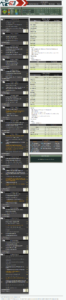
Jack Bauer Squared took a 4-2 record into Wrigley Field for a three-game series and promptly lost a 5-4 decision in the opener. 24 Hours at Wrigley never trailed, but we had opportunities to tie or take the lead in the 7th and 9th innings. Both times Bobby Murcer could not deliver the clutch hit. Kal Daniels continued his hot start with a 4-for-4 day and raised his average to .500.

Game 7

The second game of the series featured another surge of offense. We used a 4-run 9th inning to blow open a close game and then held on for a 10-7 victory. The wind picked up in the bottom of the 9th as 24 Hours at Wrigley hit three solo homers off Rod Beck before Bob Woodward came in for his 2nd save. Daniels hit his 3rd homer, and Rafael Ramirez homered and drove in four runs to raise his average to .387. 

Game 8

Our chance to win a third straight series to open the season went awry as we fell behind 7-0 before coming up short, 7-5. We had the tying runs on base with one out in the 9th inning, but a pair of ground outs ended the rally. 

Game 9

Our first series loss put us at 5-4 and tied for 1st place in the division. Our next series takes us to Royals Stadium for three games against Royal Gamers, who are also 5-4 thus far. 

Royal Gamers are second in the league in runs scored so far with 56, and we are right behind at 55. Both pitching staffs have been vulnerable to home runs as well, giving up 13 each, tied for second most in the league. It’s pretty early, though, so I won’t be surprised if pitching comes up big.

Categories
Baseball Jack Bauer Squared MLB Music Sim Baseball

What’s In a Name?

Why is this team called Jack Bauer Squared? I shouldn’t assume the references make sense to everyone.

The unique structure of this particular theme league called for owners to draft exactly one player from each of 24 franchises and disperse them across a 24-year span from 1969 to 1992. This meant that you could not have two players from, say, 1988. Nor could you have two players from the Dodgers or Yankees or anyone else. Only the “original” 24 franchises, meaning those in the major leagues as of 1969, were eligible, so it excluded the Colorado Rockies, Arizona Diamondbacks, Miami Marlins, Tampa Bay Rays, Toronto Blue Jays, and Seattle Mariners.

The draft was therefore called 24×24 to represent that each owner had to fill 24 franchise spots and 24 years to complete their roster. The 25th and final player was selected in a supplemental round consisting only of players from the six later franchises and from the years 1993-2019.

For those who were not watching television in the 00s, Jack Bauer was the name of the lead character in the Fox show 24, which followed a counter terrorism agent through a 24-hour cycle of events each season, divided into 24 one-hour episodes designed to appear as if they occurred in real time. 

One other owner took the 24×24 very literally and named his team “576.” My favorite names are “24 Lines About 24 Players,” a very clever song reference, and “A Rod, some Wood and a Big Unit,” playing off the names of three of his draftees whose names and nicknames have something distinctly in common with something totally different. 

Shoutout also must go to “P Niek! At the Disco” for combining a key player (Phil Niekro), music from the era, and a band reference. The owner also placed his team in Chicago’s Comiskey Park, famous for the 1979 promotional disaster Disco Demolition Night, so major bonus points for that.

Categories
Baseball Jack Bauer Squared Sim Baseball

Game 6: Too Much Killebrew

Harmon Killebrew led the American League in home runs six times, including in 1969 when he hit 49. We won’t be the last team he beats up on this season.

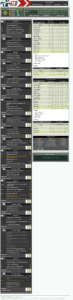
Killebrew homered for the third straight game against us and drove in all four runs for Block Chain in a 4-2 victory. We couldn’t score off Frank Tanana until the bottom of the 9th inning, when Bill Freehan delivered a two-run homer to make it a bit closer.

Game 6

Nonetheless, we already had wrapped up our second straight series victory and sit at 4-2. We next head to Chicago’s Wrigley Field for a three-game set against 24 Hours at Wrigley, owned by one of the site’s best. We have our work cut out for us.

Categories
Baseball Covid MLB

Ready or Not, Here Comes MLB

As I launch this blog and get my first set of posts out there, I am watching the Los Angeles Dodgers play a “Summer Camp” game at Dodger Stadium against the Arizona Diamondbacks. The Dodgers have pummeled the Diamondbacks two games in a row and look ready for Thursday’s much-delayed Opening Day.

As much as the game on the field looks like the real thing, everywhere are reminders that what is taking place is as much surreality as reality. Instead of fans in the seats there are cardboard cutout pictures of fans. (I would buy one, but only if I could get my Angels fan coworker on there in a Dodgers hat and a shirt that read “Astros Cheat!” I doubt they’d allow it, and good luck getting him to wear the hat anyway.)

MLB scrapped the original start of the season when Covid-19 started to spread dangerously in March, and teams all suspended their spring training just a couple weeks before the scheduled season openers. That week when one sport after another postponed or canceled games, tournaments, and seasons, all the way up to the Olympic Games, resembled nothing in history. Sports sections shrank to nothing practically overnight.

Much of baseball’s time since was spent with players and owners making news for their inability to agree on the financial terms of playing, and their tone-deaf squabbles cost fans the chance to see more games than we’re scheduled to get now. Massive labor issues remain to be resolved in the long run, but we’ll have time to lament the chasm between the sides after this mini-season wraps up.

A 60-game season represents only 37% of a normal 162-game schedule, so little margin for error remains. Losing 3 games in a row in 2020 would be like losing 8 in a row in any other season. Debate has already started about whether any historically significant statistical performances, like someone batting .400 (which hasn’t been accomplished since 1941), would count in a shorter season.

The much larger question we should all be asking, however, is whether any of this is a good idea. Unlike in the NBA’s “bubble” environment in Orlando, Florida, MLB teams will be traveling from city to city and playing in their home stadiums throughout the 60-game season.  

All this will launch while the United States watches Covid-19 cases mount and mount and hospitals nationwide begin to feel the crunch of being overwhelmed by ill patients requiring critical care. Across the country, cities and states are closing back down to keep as many people home as possible, and just now MLB is attempting to open operations in many of these hotspots. The government of Canada won’t let the Toronto Blue Jays play at home because of mandatory quarantine requirements for anyone entering the country, so a few days before the season starts the Jays have yet to find a temporary home.

We can legitimately ask what might halt this 60-game season (plus the all-important playoffs) before its scheduled finish. A handful of players have already opted out for health reasons, and several more have yet to join their teams because of positive tests. It’s easy to imagine a significant group of players on one team testing positive and having to miss a significant chunk of this short season, with dramatic impact on the standings. How many teams would have to suffer such challenges before many more players drop out or teams find themselves unable to field a healthy roster?

It is all much too surreal. These guys on TV look like they are playing baseball, but it feels like they’re playing a much more dangerous game. 

Categories
Baseball Jack Bauer Squared Sim Baseball

Game 5: Offense Comes Alive

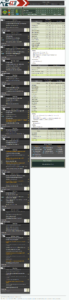
Once again, our pitching came out strong to start the second game of the series, with Burt Hooton holding Block Chain hitless through the first 5 innings. His luck ran out in the top of the 6th, however, as he gave up 5 runs on a pair of home runs and left after recording just one out. 

We still trailed 5-3 in the bottom of the 8th before breaking out for a 6-run inning to turn the tide. The big hit came from Kal Daniels for the second straight game, a grand slam this time. If you’re going to give up a big inning, you might as well return the favor.

Game 5

Jack Bauer Squared improved to 4-1 and for the moment sits alone atop the division. Sure, it’s great to start off well, but there are still 157 to play.

Categories
Baseball Hobbies

Something Transcendent

Baseball entered my life with force in 1977, the year I turned 7. Certainly I had been to a few games before then, but my understanding of the game and knowledge of the players took off that year. I can’t precisely explain which held the most appeal: the actual unfolding of the physical game on the field, or the way the sport could be captured by numbers. 

People fascinated with neither might not be able to appreciate how the two blend. Yet I’m certain there are parallels in the world of bird watching, or stamp collecting, or gardening. You develop a distinct appreciation for the physical element of your hobby, i.e, the coloring of the birds, the art on the stamps, the flowering of your plants. At the same time, your mind also basks in the minutiae unique to that hobby, i.e., the taxonomy and anatomy of the birds, the rarity and values of the stamps, and the secrets of soils and seasons in the garden.

Surely the passions we develop appeal to us best on many levels, challenging our minds, lifting our senses, and soothing our souls. So baseball was, and is, for me, something transcendent and deeply satisfying at my core. And my inability to throw far or accurately or hit a curveball did nothing to diminish its hold on me all these years since.

Categories
Baseball Jack Bauer Squared Sim Baseball

Game 4: Homer Heroics

Our home opener continued the pitching-first trend of the previous two games, as it remained scoreless through 6 innings. Block Chain’s Jose Deleon matched up with my Bert Blyleven to allow a combined 5 hits to that point. After Blyleven shut down the middle of the Block Chain lineup in the top of the 7th, the singing of Take Me Out to the Ballgame must have inspired my offense.

Pinch hitter Alex Cole hit for Blyleven with the bases loaded and one out and hit into a run-scoring force play but used his speed to avoid the double play. That kept the inning alive for leadoff man Kal Daniels, who drove Deleon’s 108th pitch over the wall in center field for a 4-0 lead.

Rod Beck pitched an easy 8th inning and should have emerged unscathed from the 9th as well. Rafael Ramirez booted a ground ball for his third error of the season to give Block Chain extra opportunities. Slugger Harmon Killebrew didn’t miss it, homering to bring the lead down to 4-2. 

Closer Bob Woodward came in to get the final out and wrapped up his second save. We moved to 3-1 on the season and into a 3-way tie atop the National League West. 

Game 4

So far my emphasis on pitching in the draft has paid off with the league’s best ERA (2.21), but it’s very, very early. Team stats, and even individual ones, don’t start taking on significance until 20-30 games because of the skewing effects of outlier performances.